



Gyeongsangbuk-do
Places to visit in Gyeongju-si
This city brings together Silla history and lakeside retreats. Around Bomun Tourist Complex, enjoy lakeside walks and cultural activities.
Explore on the map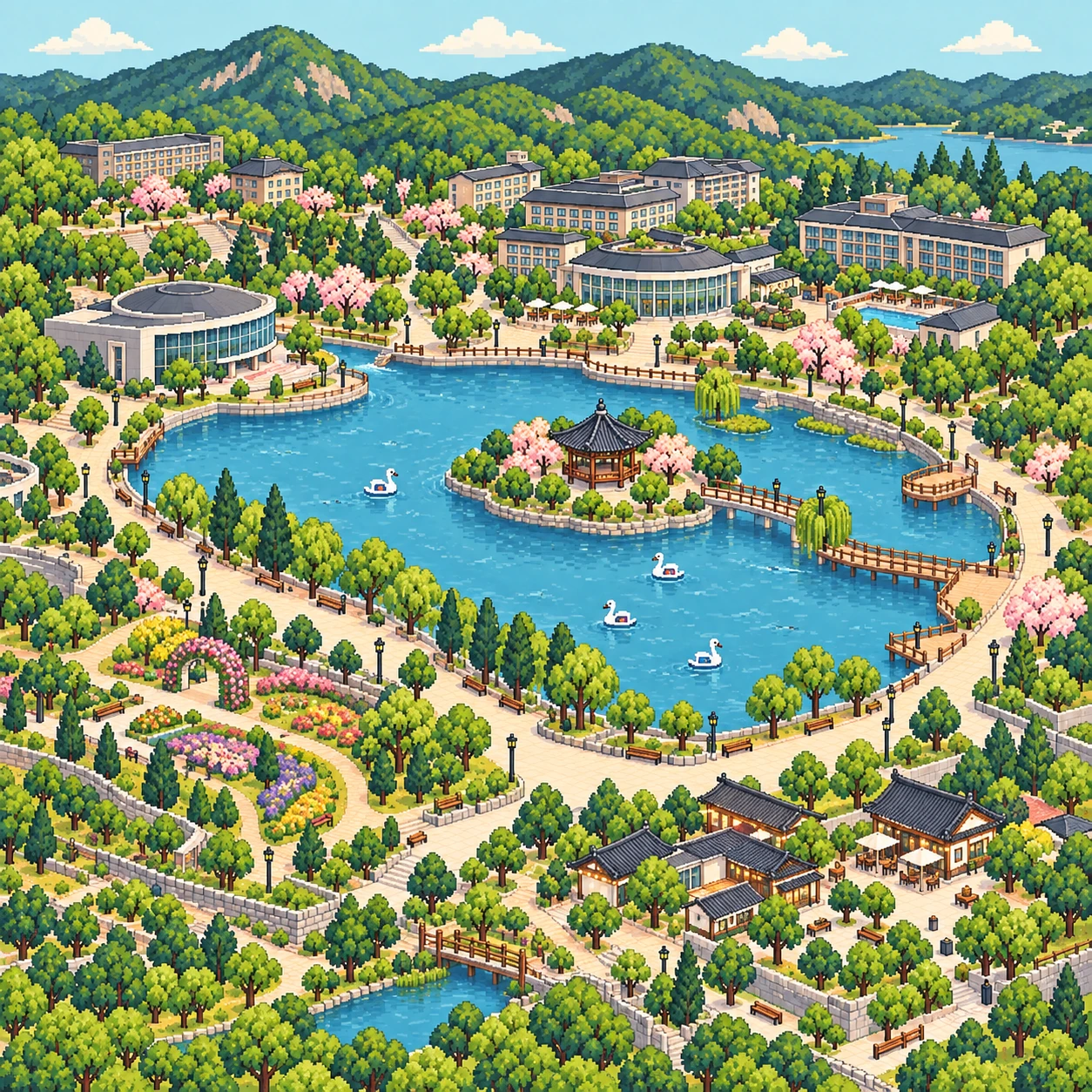
Places to visit
72 placesBomun Tourist Complex
An inland resort area with hot spring attractions for visitors throughout the year. It is designed to evoke an elegant, traditional atmosphere.
View on mapTohamsan Mountain
This mountain east of Gyeongju includes the slopes and ridges where Bulguksa Temple and Seokguram Grotto are located. Forest trails and the area near the summit offer views of the mountain and the East Sea.
View on mapBulguksa Temple
This Silla-era temple on the slopes of Tohamsan Mountain is home to Dabotap and Seokgatap pagodas. Explore the grounds, where halls and stone stairways come together.
View on mapSeokguram Grotto
This Unified Silla-era grotto temple sits halfway up Tohamsan Mountain. You can view the principal Buddha inside through a glass screen.
View on mapRoyal Tomb of King Jinji
This ancient tomb in the Seoak-dong area of Gyeongju is believed to be the tomb of Silla's King Jinji. Other views have also been put forward about who is buried here.
View on mapRoyal Tomb of King Jinheung
This ancient tomb in Seoak-dong, Gyeongju, is believed to be the tomb of Silla's King Jinheung. Scholars disagree about the identification of the tomb's occupant.
View on mapRoyal Tomb of King Muyeol
The tomb of Silla's King Taejong Muyeol stands in Seoak-dong alongside a monument to the king. You can explore it together with the ancient tombs behind it.
View on mapSeoak-dong Ancient Tombs
Ancient tombs of Silla royalty stand in a row on the hill behind the Royal Tomb of King Muyeol. The grassy burial mounds sit against a mountain backdrop.
View on mapRoyal Tomb of King Beopheung
This ancient tomb is believed to be the tomb of Silla's King Beopheung. A low ridge extends behind the burial mound, with modest stone monuments nearby.
View on mapTomb of Kim Yu-sin
This is the tomb of Kim Yu-sin, set on the slopes of Songhwasan Mountain. A ring of protective stones and the twelve zodiac figures encircle the burial mound.
View on mapRoyal Tomb of King Munseong
This ancient tomb in Gyeongju is believed to be the tomb of Silla's King Munseong. You can explore it alongside other nearby Silla royal tomb sites.
View on mapRoyal Tomb of King Heonan
This ancient tomb in Seoak-dong, Gyeongju, is believed to be the tomb of Silla's King Heonan. You can visit it along with the area's other royal tombs and ancient tombs.
View on mapYangdong Folk Village
This traditional village of hanok houses is in Gangdong-myeon, Gyeongju. Old homes and lanes blend with the gentle mountain slopes around the village.
View on mapRoyal Tomb of King Heungdeok
This Silla royal tomb is set in the wooded hills of northern Gyeongju. You can look around the stone carvings near the burial mound and the forest paths.
View on mapUngok Seowon Confucian Academy
Located in Gangdong-myeon, Gyeongju, this Confucian academy honors Gwon Haeng, the founder of the Andong Gwon clan. You can see the ginkgo tree in the courtyard and the traditional buildings.
View on mapOksan Seowon Confucian Academy
This Confucian academy was built to honor the Joseon scholar Yi Eon-jeok. Explore its architecture, including the lecture hall and pavilion, with the surrounding mountains as a backdrop.
View on mapThirteen-story Stone Pagoda at Jeonghyesa Temple Site
This Silla-era stone pagoda remains at the site of Jeonghyesa Temple in Gyeongju. Its distinctive, soaring silhouette can be seen from the surrounding fields.
View on mapDokrakdang House
This historic house and garden were home to the Joseon scholar Yi Eon-jeok. You can take in the quiet scenery around the buildings and the valley.
View on mapRoyal Tomb of King Gyeongdeok
This ancient tomb on a hill in Naenam-myeon, Gyeongju, is believed to be the tomb of Silla's King Gyeongdeok. Other views have also been suggested about who is buried here.
View on mapGujeong-dong Square Tomb
This Silla-era tomb in Gujeong-dong, Gyeongju, has a square shape. Its form differs from the more familiar rounded burial mounds.
View on mapRoyal Tomb of Queen Jindeok
This ancient tomb near the woods of Hyeongok-myeon, Gyeongju, is believed to be the tomb of Silla's Queen Jindeok. Scholars disagree about the identity of the person buried here.
View on mapRoyal Tomb of King Talhae
This burial mound on the southern slopes of Sogeumgangsan Mountain is believed to be the tomb of Silla's King Talhae. You can explore it along with nearby Sungsinjeon Shrine and the quiet forest paths.
View on mapBaengnyulsa Temple
This temple in Gyeongju sits halfway up Sogeumgangsan Mountain. In its small grounds, surrounded by rocks and woods, you can see heritage associated with the story of Ichadon’s martyrdom.
View on mapRoyal Tomb of King Heondeok
This Silla royal tomb is in Dongcheon-dong, Gyeongju. Some old stone structures remain around the rounded burial mound.
View on mapGameunsa Temple Site
This Silla-era temple site near the East Sea has two stone pagodas standing side by side. You can take in the open grounds and surrounding fields.
View on mapUnderwater Tomb of King Munmu
This rocky islet in the East Sea is believed to be the underwater tomb of Silla's King Munmu. From the shore, you can look out at Daewangam Rock and the waves.
View on mapIgyeondae Pavilion
This pavilion on the East Sea coast offers a view of the Underwater Tomb of King Munmu. The sea and Daewangam Rock appear together in the view.
View on mapYangnam Columnar Joints
These distinctive rock formations stretch along the coast of Yangnam-myeon, Gyeongju. From the coastal walking path, you can see horizontally laid column-shaped rocks and formations that spread like a fan.
View on mapBunhwangsa Temple
This old temple in Gyeongju was founded during the reign of Queen Seondeok of Silla. Its distinctive stone pagoda, built to resemble a brick tower, remains on the grounds.
View on mapHwangnyongsa Temple Site
This is the site of Hwangnyongsa, a large temple of Silla, and a broad expanse of temple grounds remains today. Explore the building and pagoda sites to get a sense of the temple's scale.
View on mapThree-story Stone Pagoda at Hwangboksa Temple Site
This Silla-era three-story stone pagoda remains at the site of Hwangboksa Temple in Gyeongju. Against the surrounding fields and low hills, you can take in its balanced proportions.
View on mapCheongun-dong Temple Site
These are the remains of a Silla-era temple in Cheongun-dong, Gyeongju. You can explore the site, where traces of the temple buildings remain.
View on mapHeungnyunsa Temple Site
This Gyeongju site is believed to be where the Silla-era Heungnyunsa Temple once stood. You can explore traces of a temple built in the ancient capital.
View on mapGyeongju Eupseong Fortress
This old fortress once enclosed central Gyeongju, and some restored walls and gate pavilions remain. You can explore traces of the fortress along a walking route through downtown.
View on mapFormer Inyongsa Temple Site
This site in Inwang-dong, south of Wolseong, is believed to be the remains of a Silla-era temple. You can explore traces of a temple that once stood in the ancient capital.
View on mapJeonrangji Palace Site
This site in northern Gyeongju is believed to be the remains of a Silla-era palace. Look around the area and imagine the buildings that once stood in the old capital.
View on mapFive-story Stone Pagoda at Nawon-ri
This Silla-era five-story stone pagoda stands in Nawon-ri, Hyeongok-myeon, Gyeongju. You can see it amid the quiet village scenery.
View on mapGeumcheok-ri Ancient Tombs
Large Silla-era tombs cluster in the fields of Geoncheon-eup. Burial mounds stretch across the broad landscape.
View on mapDanseoksan Mountain
This mountain west of Gyeongju is known for a cleft rock near its summit and the rock-carved Buddhas at Sinseonsa Temple. Follow the mountain trails to see the rocks and cultural heritage.
View on mapGyeongju Wolseong Palace Site
This was the site of the Silla royal palace, and its crescent-shaped hill remains. From the nearby walking paths, you can see the old palace grounds and traces of the moat.
View on mapDonggung Palace and Wolji Pond
This is the historic site of a Silla palace annex and pond. Explore the scenery where the pond and reconstructed halls come together.
View on mapCheomseongdae Observatory
This Silla-era astronomical observatory in central Gyeongju has the shape of a rounded tower built from layers of stone. You can also explore the surrounding lawns and flower gardens.
View on mapGyeongju National Museum
This national museum focuses on the history and culture of Silla. Explore artifacts excavated across Gyeongju and the Divine Bell of King Seongdeok.
View on mapWest Five-story Stone Pagoda at Janghang-ri
This Silla-era stone pagoda remains at the Janghang-ri temple site in the mountains east of Gyeongju. You can explore the ruins amid the surrounding mountain and valley scenery.
View on mapGolgulsa Temple
This grotto temple east of Gyeongju is known for its rocky cliffs and rock-carved seated Buddha. Follow the mountain path to explore the grottoes and temple built into the rocks.
View on mapGirimsa Temple
This historic temple sits on the slopes of Hamwolsan Mountain. Take your time exploring the grounds, where temple buildings and forest paths come together.
View on mapDaereungwon Tomb Complex
This complex of tombs belonging to Silla kings and aristocrats is in central Gyeongju. Walk among the large grassy burial mounds and explore sites such as Cheonmachong Tomb.
View on mapWoljeonggyo Bridge
This bridge was reconstructed based on a Silla-era crossing over the Namcheon Stream. Walk along the water to see the bridge's pavilion-style design.
View on mapHwangnidan-gil Street
This popular street runs through the lanes of Hwangnam-dong, Gyeongju, with hanok houses, shops, and cafes. Explore the old residential scenery alongside modern businesses.
View on mapRoyal Tomb of King Naemul
This rounded burial mound southwest of Cheomseongdae is believed to be a royal tomb. Scholars disagree about whether King Naemul is buried here.
View on mapNajeong Well
According to Silla's founding legend, this is where Bak Hyeokgeose was born. You can explore the excavated site and the open space around it.
View on mapFive Royal Tombs in Gyeongju
Five burial mounds believed to be the tombs of early Silla kings and queens stand together here. Pine woods and broad grassy grounds surround them.
View on mapSamneung Tombs in Bae-dong
Three ancient tombs of a scale associated with Silla royalty stand in a row on the western slopes of Namsan Mountain. You can visit them along a path through the pine woods.
View on mapPoseokjeong Pavilion Site
This is the site of Poseokjeong, a gathering place for banquets during the Unified Silla period. You can see the curving stone channel built to guide water.
View on mapGyeongju Namsan Mountain
This mountain rises south of Gyeongju. Silla Buddha statues, pagodas and temple sites are scattered across its ridges and valleys, so you can take in both nature and historic sites along the trails.
View on mapTomb of King Ilseong
This burial mound west of Gyeongju Namsan is believed to be the tomb of Silla's King Ilseong. There are differing views about who is buried here.
View on mapTomb of King Jeonggang
This burial mound in a pine forest east of Gyeongju Namsan is believed to be the tomb of Silla's King Jeonggang. Follow nearby forest paths to explore it alongside other historic sites.
View on mapTomb of King Heongang
This burial mound east of Gyeongju Namsan is believed to be the tomb of Silla's King Heongang. Follow the forest path to visit it along with the nearby Tomb of King Jeonggang.
View on mapNangsan Mountain
This low mountain rises east of Gyeongju, with Silla royal tombs and temple remains nearby. Follow the forest paths to explore the historic sites.
View on mapTomb of Queen Seondeok
This tomb, believed to be that of Silla's Queen Seondeok, lies in the forest on Nangsan Mountain. A quiet walking path runs around its rounded mound.
View on mapGyeongju Sacheonwangsa Temple Site
This temple site south of Nangsan dates from the Unified Silla period. You can explore excavated building foundations and stone artifacts.
View on mapTomb of King Sinmun
This historic site in Gyeongju is believed to be the tomb of Silla's King Sinmun. You can view the burial mound near quiet woods and fields.
View on mapGyeongju Mangdeoksa Temple Site
Mangdeoksa Temple stood here during the Unified Silla period, and its site and flagpole supports remain. Walk across the open grounds to see the layout of the former temple.
View on mapTomb of King Hyogong
This rounded burial mound near Nangsan is believed to be the tomb of Silla's King Hyogong. Its simple form has little decoration.
View on mapTomb of King Hyoso
This burial mound in Gyeongju is believed to be the tomb of Silla's King Hyoso. You can see its rounded mound against the surrounding fields.
View on mapTomb of King Seongdeok
This burial mound is believed to be the tomb of Silla's King Seongdeok. Stone objects and carved figures remain around the mound.
View on mapMyeonghwalseong Fortress
This Silla stone fortress was built on Myeonghwasan Mountain in Bomun-dong. Follow the mountain path to see traces of the walls and the surrounding forest.
View on mapTomb of King Jinpyeong
This rounded burial mound sits in the middle of the Bomun fields. Its open surroundings let you take in the tomb and the broad fields together.
View on mapGyeongju Hwangseong-dong Tomb
These Silla tomb remains are in Hwangseong-dong, Gyeongju. They offer a glimpse of the city's historic burial culture.
View on mapFormer Tomb of King Minae, Gyeongju
This Silla burial mound in Gyeongju is believed to be the tomb of King Minae. You can see the royal tomb marker and the quiet surroundings.
View on mapTomb of King Sinmu
This rounded burial mound in Dongbang-dong, Gyeongju, is believed to be the tomb of King Sinmu. It is a quiet historic site with a mound and marker.
View on mapRoyal Tomb of King Wonseong
Also known as Gwaereung, this is the tomb of Silla's King Wonseong. Stone figures and statues of military figures stand around the burial mound.
View on map
Scenes of the area
- A day to unwind in Bomun.
- Buddhist heritage on the slopes of Tohamsan Mountain
- Royal tombs and burial mounds in Seoak-dong
- Ancient tombs on the western mountain slopes
- Northern Gyeongju villages and Confucian academies
- A Confucian academy in the Oksan Valley
- Royal tombs and burial mounds on the southern hills
- Historic sites north of Sogeumgangsan Mountain
- Royal tombs and rocky shores on the East Sea coast
- A Silla temple site east of downtown
- Streets and historic sites of the ancient capital
- Burial mounds and mountains in Geoncheon
- The Silla palace site and a pond at a detached palace
- A mountain temple route in eastern Gyeongju.
- Ancient tombs and bridges in the old city center.
- Royal tombs and legends west of Namsan Mountain.
- Forest trails and royal tombs on Namsan Mountain.
- Silla heritage sites south of Nangsan Mountain.
- Fields around the royal tombs of Baeban-dong.
- Mountain fortresses and ancient tombs in the Bomun fields.
- Royal tombs on the eastern outskirts.