



Incheon
Places to visit in Ganghwa-gun, Incheon
History and historic sites remain on this island between the mountains and the sea. Plan an outing around Manisan Mountain for trails and coastal views.
Explore on the map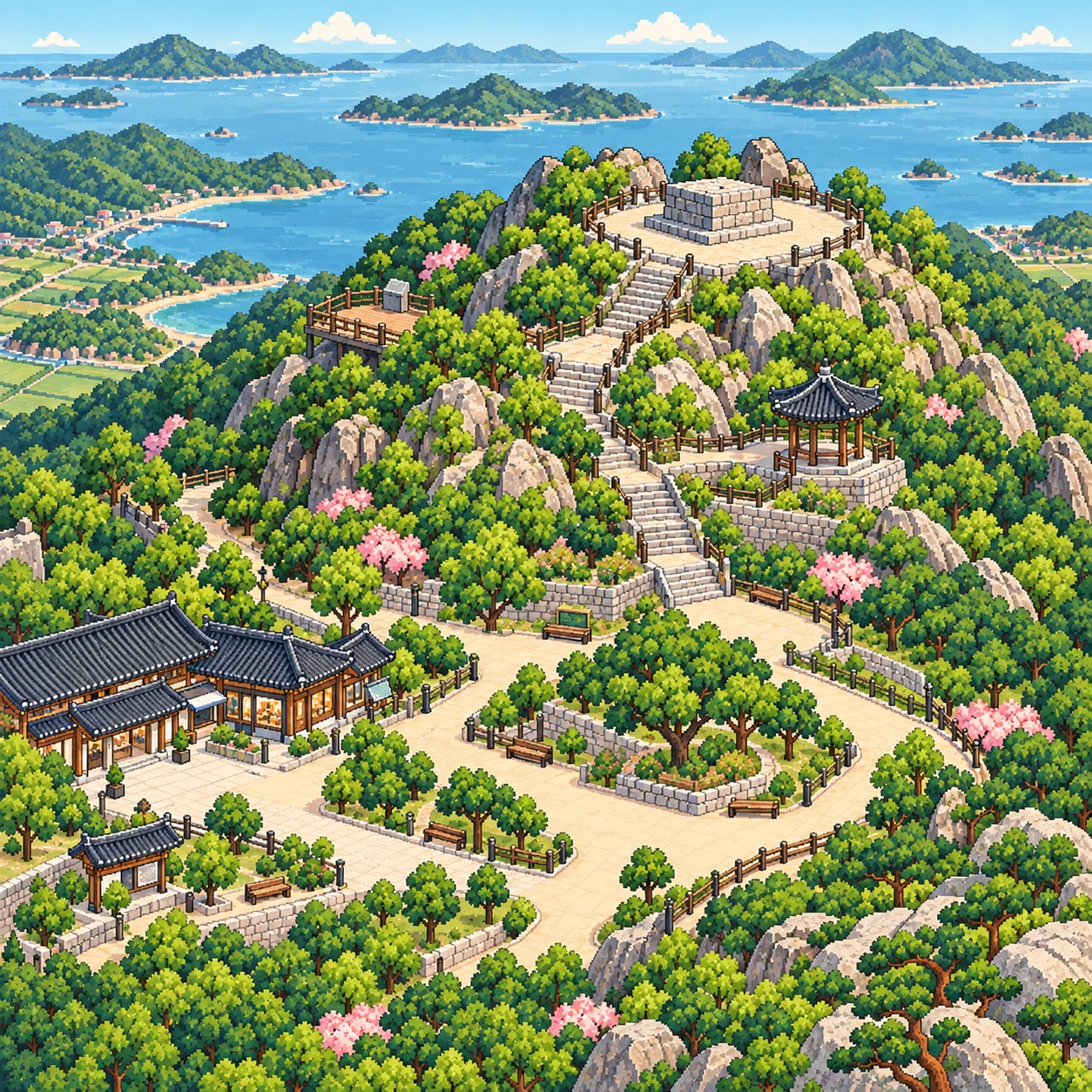
Places to visit
40 placesManisan National Tourist Area
Located midway between Baekdusan and Hallasan, Manisan is considered one of Korea's most powerful places in terms of gi, or spiritual energy. Rituals are held each year at Chamseongdan on the summit, where the torch for the National Sports Festival is also lit by the Seven Fairies.
View on mapGanghwa Bugeun-ri Dolmen
This Bronze Age site preserves a table-shaped dolmen, with a large capstone resting on supporting stones. Explore it alongside nearby dolmen sites to learn about Ganghwa's prehistoric culture.
View on mapGanghwa History Museum
This museum presents local history from prehistoric times to the modern era. Explore Ganghwa's cultural heritage alongside the nearby dolmen site.
View on mapGanghwa Natural History Museum
This museum exhibits natural history materials on Earth's history, living things, and minerals. See a large sperm whale specimen discovered in Ganghwa.
View on mapGanghwa Astronomical Science Center
This visitor facility in Ganghwa explores astronomy and space science. Observe celestial objects and turn your attention to the island's night sky.
View on mapMinmeoru Beach
This beach is in Maeum-ri on the west side of Seokmodo. Stroll along the shore and take in the Yellow Sea horizon and tidal flats.
View on mapBomunsa Temple
This temple is on Naksan Mountain on Seokmodo. Find the temple buildings at the foot of the mountain and the rock-carved statue of Avalokitesvara, and enjoy views of the island and sea from the temple.
View on mapYeonmijeong Pavilion
This pavilion on Ganghwa's northern coast overlooks the Han and Imjin rivers as they flow toward the Yellow Sea. Climb to the pavilion floor to enjoy views of the rivers and sea to the north and east.
View on mapHwang Hyeong's Tomb
This is the tomb of General Hwang Hyeong, who served during the Three Ports Disturbance. See the burial mound, tomb stele, stone lantern, and statues typical of Joseon-era tombs.
View on mapGyodongdo Island
One of the major islands in Ganghwa County, it has a traditional market and historic sites. Explore its villages and coastal scenery.
View on mapGyodong Hyanggyo Confucian School
A traditional school on Gyodongdo, this hyanggyo served local Confucian education and ancestral rites. Explore its traditional tiled-roof buildings and quiet courtyard.
View on mapDaeryong Market
This traditional market is in Daeryong-ri on Gyodongdo. Walk its shop-lined lanes and get a feel for everyday life in an island village.
View on mapManghyangdae Lookout
This viewpoint on Gyodongdo looks north across the sea. Take in the northern horizon and the island's borderland setting.
View on mapHwagaesan Fortress
These are the remains of an old fortress on Hwagaesan Mountain on Gyodongdo. Follow the traces of the walls along the slope and look out over the surrounding islands.
View on mapGanghwa Hyanggyo Confucian School
Founded during the Goryeo period, this local school remains in Ganghwa-eup. Explore traditional buildings and the courtyard, including Daeseongjeon and Myeongnyundang.
View on mapJoyang Textile Factory
This cultural space uses a former textile factory built in 1937 and nearby old houses. Explore the aged factory architecture and the objects displayed inside.
View on mapGoryeosan Mountain
This 436-meter mountain rises in northern Ganghwa, with azaleas covering the ridges near its summit in spring. Hike its trails for views of Ganghwa and the West Sea.
View on mapGanghwa Hongneung Royal Tomb
This is the site of a Goryeo-era royal tomb on Ganghwa. See the modest tomb grounds surrounded by trees.
View on mapGoryeo Palace Site
This is the site of the palace and government offices established after Goryeo moved its capital to Ganghwa during its war with the Mongols. You can also explore historic spaces later used as a local government office and temporary palace during the Joseon period.
View on mapGanghwa Anglican Church
This Anglican church in Ganghwa-eup was completed in 1900. Its design reflects Korean traditional architecture and offers a glimpse into Ganghwa's modern religious history.
View on mapYongheunggung Palace
This historic site in Ganghwa-eup stands where King Cheoljong lived before ascending the throne. Explore its traditional hanok buildings and courtyard, and picture his years in Ganghwa.
View on mapGanghwa Literature Museum
This exhibition hall introduces writers from Ganghwa and literary works connected to the area. See local writing and literary materials in its compact galleries.
View on mapGapgot Fort
This coastal defense site overlooks the Ganghwa Strait and preserves traces of the old defenses around Gapgot. It is presented as a sightseeing stop to visit along with the Ganghwa War Museum.
View on mapGanghwa Sanseong Fortress
This old fortress surrounds Ganghwa-eup. Built during the Goryeo period amid Mongol invasions and rebuilt several times, it lets you follow the town's historic defenses along the walls.
View on mapGanghwa Stone Water Gate
This is the site of an old stone water gate. Visit it with Ganghwa Fortress to see how waterways and walls shaped the old town.
View on mapGanghwa Seokneung Royal Tomb
This is the site of a Goryeo-era royal tomb on Ganghwa. Walk around the tomb grounds at the foot of the mountain and reflect on the island's long history.
View on mapGanghwa Gareung Royal Tomb
This is the site of a Goryeo-era royal tomb on Ganghwa. Take in the quiet surroundings of the low burial mound and nearby mountain slopes.
View on mapGanghwa Gonreung Royal Tomb
This is the site of a Goryeo-era royal tomb on Ganghwa. Discover traces of the royal tomb in quiet grounds on the mountain slope.
View on mapChojijin Fort
This coastal defense site once guarded southern Ganghwa. Explore the remains of the old fort by the sea and reflect on Ganghwa's wartime history.
View on mapGwangseongbo Fort
This historic site was part of Ganghwa's coastal defenses and is known as a site of fighting during the Sinmiyangyo. Walk through the sea-facing fortress grounds to see traces of the past.
View on mapYongdu Fort
This fortification was built to defend Ganghwa's coast. Its stone walls jut out toward the sea, preserving traces of the island's old coastal defenses.
View on mapDeokjinjin Fort
These are the remains of a fort that once guarded Ganghwa's southeastern coast. Explore traces of its coastal defenses and learn about Ganghwa's history.
View on mapJeongjoksanseong Fortress
This old fortress was built around Jeongjoksan Mountain. Follow the forest paths to see traces of the walls and enjoy the mountain scenery.
View on mapJeondeungsa Temple
This old temple stands within Jeongjoksanseong Fortress and has been regarded as a place to pray for the royal family's well-being since the Goryeo period. Explore the fortress forest trails and heritage buildings such as Daeungjeon Hall.
View on mapOnsuri Anglican Church
This Anglican church is in Onsuri, Gilsang-myeon, Ganghwa. Compare the hanok-style St. Andrew's Church and the basilica-style St. Peter's Church, which stand side by side.
View on mapGanghwado Island
The main island of Ganghwa County in Incheon, it is a large island with a long coastline and many villages. Find historic sites and sea views throughout the island.
View on mapDongmak Beach
This beach sits on the tidal-flat coast of southern Ganghwa. Walk along the shore and take in the broad tidal flats and West Sea scenery.
View on mapSeongmodo Island
West of Ganghwado, this island is connected to the main island by Seongmo Bridge. Follow its coast and villages to find places for an outing, including temples and beaches.
View on mapSeongmodo Arboretum
This nature attraction on Seongmodo is a place to see trees and plants. Stroll along the forest paths and enjoy the island's green scenery up close.
View on mapSeongmodo Mineral Hot Springs
This mineral hot spring facility is on Seongmodo. Take a break in the hot springs while exploring the island.
View on map
Scenes of the area
- Chamseongdan Altar on Manisan Mountain.
- Dolmens and memories of nature
- Seokmodo's mountain temples and the sea
- Yeonmijeong Pavilion and the legacy of General Hwang Hyeong
- Gyodong's old village and market
- Gyodong's coast and fortress
- Ganghwa-eup's Confucian school and old factory
- An azalea mountain trail and Goryeo royal tombs
- Traces of Goryeo and King Cheoljong in Ganghwa-eup
- A route by Ganghwa-eup's fortress walls and the sea.
- A mountainside with Goryeo royal tombs.
- Ganghwa's southeastern coastal defenses.
- Forest trails at Jeongjoksanseong Fortress and Onsu-ri.
- Island scenery across the tidal flats south of Ganghwa.
- Seokmodo's forests and hot springs.