


Seoul
Places to visit in Gangseo-gu
Here you can visit the botanical garden in Magok, wetlands along the lower Hangang River, and historic sites from old Yangcheon. Plan your visit around garden walks and nature watching by the river.
Explore on the map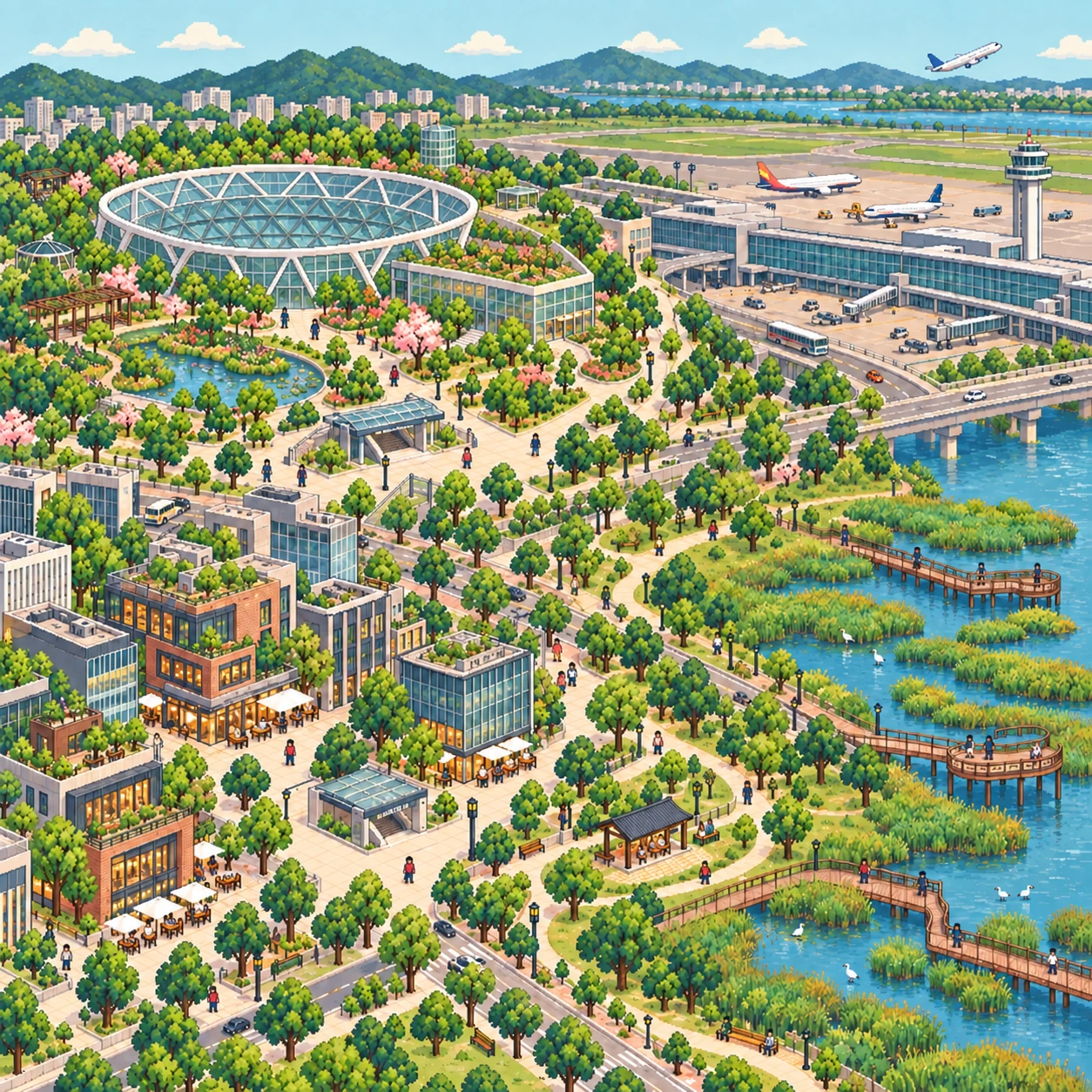
Places to visit
10 placesLive crowd levels and weather for major places in Seoul are on the map.
Balsan Station
The area around the station connects the Magok business district with its restaurant streets. Explore the shops along the main roads and the businesses on the side streets.
View on mapSeoul Botanic Park and Magongnaru Station
The Seoul Botanic Park area has a greenhouse, outdoor gardens, and lakeside paths. Walk from Magongnaru Station to see the plants and waterside scenery.
View on mapGimpo International Airport
This area in western Seoul includes the airport and connected shopping facilities. Start or end your trip with a meal or some shopping near the airport.
View on mapGangseo Hangang Park
A riverside park with wetlands and walking paths along the lower Han River. Look for waterside plants and birds among the relatively natural river scenery.
View on mapGungsan Tunnel History Exhibition Hall
The Gungsan Tunnel is said to have been dug late in the Pacific War during Japanese colonial rule. It was intended to store weapons and ammunition, monitor Gimpo Airfield, or serve as a unit headquarters during air raids.
View on mapYangcheon Hyanggyo Confucian School
Built in 1411, the 11th year of King Taejong's reign, it is the only hyanggyo, or Confucian school, remaining in Seoul. Despite its name, it is in Gayang-dong, Gangseo-gu, not Yangcheon-gu.
View on mapSeoul Yangcheon Ancient Fortress Site
This old fortress site is on Gungsan Mountain, behind Yangcheon Hyanggyo. It is believed to have been built before Baekje King Munju moved his capital to Ungjin in 475, as a defense against Goguryeo attacks from across the river, and may have remained a fortress until 1470, during the reign of Joseon King Seongjong.
View on mapHeogabawi Cave
This cave is believed to have been inhabited by people in the Stone Age and is considered valuable for research. Heo Jun is said to have completed Donguibogam here.
View on mapHeojun Neighborhood Park
Near the park is Heogabawi Rock, Seoul Monument No. 11. The park has the legendary Gwangju Rock, a statue of Heo Jun treating patients, a lakeside pavilion, and children's play facilities, and serves as a place for nearby residents to relax.
View on mapYaksasa Temple
This temple belongs to the Jogye Order of Korean Buddhism's directly administered district and holds the highest standing among traditional temples in Gangseo-gu, Seoul.
View on map
Scenes of the area
- From the botanical garden to the Han River.
- Gungsan Tunnel History Exhibition Hall and Yangcheon Hyanggyo Confucian School.
- Yaksasa Temple.